Home / Drawing register / Sheet 06
Sheet 06 · Consents
What can you change on a house in a conservation area?
A conservation area does not freeze your house. It takes away some of the rights you would otherwise have, and an Article 4 direction may take away more.
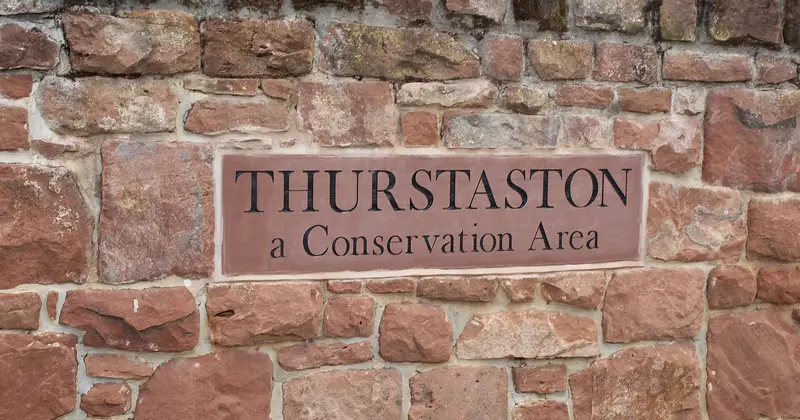

You can still do a good deal without a planning application. Repairs and repainting generally need no permission, and neither do windows of similar appearance in most places. What changes is that certain permitted development rights shrink or fall away, chiefly for work that alters how the house looks from the road. Local Article 4 directions can then go further, so the answer differs from street to street. This guide covers England; the rules below come from the government's technical guidance for householders, which is guidance and not a substitute for the Order itself.
What "permitted development" means here
Permitted development is a general planning permission granted nationally for certain work, so no application is required if every condition is met. Conservation areas are part of what the regulations call article 2(3) land, along with national parks, the Broads, areas of outstanding natural beauty and World Heritage Sites. The Planning Portal also calls these designated areas. Listed buildings have their own consent regime on top, and a house that is both must satisfy both.
Where the rules bite
| Work | In a conservation area | Reference |
|---|---|---|
| Cladding any part of the exterior | Needs an application | Class A, A.2(a) |
| Extension beyond a side wall | Needs an application | Class A, A.2(b) |
| Rear extension of more than one storey | Needs an application | Class A, A.2(c) |
| Roof extension, including dormers | Needs an application | Class B, B.1(f) |
| Chimney, flue or soil pipe on a wall or slope fronting a highway, on the principal or side elevation | Needs an application | Class G, G.1(c) |
| Satellite dish on a chimney, wall or slope facing and visible from a highway | Needs an application | Class H, H.1(e) |
| Outbuilding between a side wall and the boundary | Needs an application | Class E, E.3 |
| Windows of similar appearance | Usually permitted unless a direction applies | Class A, A.3(a) |
The rear extension limits are worth a closer look. The guidance allows a single-storey rear extension in a conservation area up to 3 metres beyond the original rear wall, or 4 metres for a detached house, within other limits such as height and coverage. Larger rear extensions that use the neighbour consultation scheme are limited to land that is not article 2(3). "Original" generally means the house as first built or as it stood on 1 July 1948, so earlier additions count against you.
Cladding catches people out on old houses. The list covers stone, artificial stone, pebble dash, render, timber, plastic and tiles. If you are thinking about external wall insulation or re-rendering a whole elevation in a new finish, ask the planning authority early. Repairing existing lime render with matching material is a different conversation from adding a new skin, and worth having in those terms.
Windows and doors
Under Class A, materials must give a similar appearance to the existing house. The guidance even says uPVC double-glazed windows may be acceptable where they look similar in overall shape, colour and frame size. So in a conservation area with no Article 4 direction, like-looking replacements can be permitted development, which surprises many people. That does not make them a good idea. Read our guide to repairing sashes first. And the Planning Portal warns that designated areas can have additional restrictions, so ask before ordering.
The Article 4 question
An Article 4 direction lets a local authority withdraw specified permitted development rights across a defined area. The government guidance says they should be applied in a measured and targeted way. The Planning Portal notes that they are most common in conservation areas. Every direction is worded differently, and it is the wording that decides what you can still do.
To find out:
- Find your local planning authority and look for its conservation area pages, or ask the planning department which directions apply to your address.
- Read the direction itself, because it may apply only to elevations that face a road or to named properties.
- Check the planning history for a condition that removed rights on your particular house. Permission conditions can do the same job as a direction.
- Email the planning department with a short description and photographs, then keep the reply.
Trees
Trees are the rule people forget when clearing a garden. A tree in a conservation area that is not under a Tree Preservation Order still has protection: you must give the authority 6 weeks' notice, called a section 211 notice, before certain work, unless an exception applies. Trees already under an Order follow the usual Order procedures. Your authority can tell you which applies.
Roofs, solar panels and the rest
Re-roofing in matching materials will not usually need planning permission if it does not materially affect external appearance, as we explain in our slate roof guide. Changing the look of a roof is another thing. Roof lights fall under Class C, limited to a 150mm projection and no higher than the original roof. Solar panels have their own conditions: the Planning Portal says they may be permitted development within limits, and advises discussing them with the authority.
Sources
Opened and read by the editors in November 2026. Rules and guidance change, so check the current version.